
 By
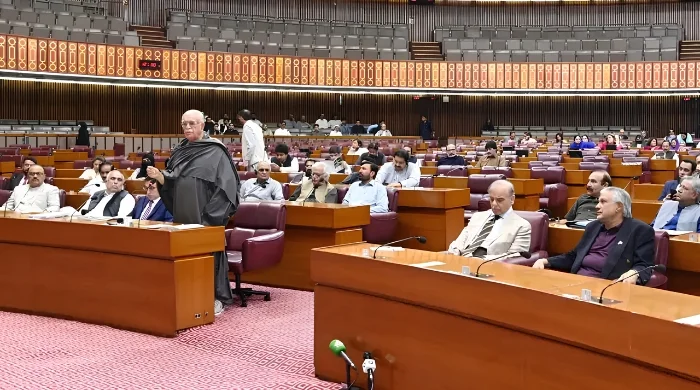
By Finance Minister Muhammad Aurangzeb has presented the federal Budget 2026–27 in the National Assembly, laying out the government’s financial roadmap for the upcoming fiscal year. The budget comes at a time when Pakistan is continuing efforts to stabilize its economy under inflationary pressure, external debt obligations, and ongoing structural reforms.
The budget presentation reflects a broader attempt by the government to balance fiscal discipline with targeted relief measures for citizens and businesses, while also aligning with international financial commitments and reform programs.
Government Focus on Fiscal Discipline and Revenue Expansion
A central theme of the Budget 2026–27 is strengthening fiscal discipline and increasing domestic revenue generation. The government has emphasized expanding the tax net as a key strategy to reduce reliance on borrowing and improve financial sustainability.
According to the budget strategy, efforts will focus on:
- Bringing more sectors into the formal tax system
- Improving the efficiency and digital capacity of the Federal Board of Revenue (FBR)
- Reducing unnecessary government expenditures
- Enhancing transparency in public financial management
Officials highlighted that long-term economic stability depends on widening the tax base rather than increasing pressure on existing taxpayers, especially the salaried class and compliant businesses.
Relief Measures for Salaried Individuals and Businesses
The Budget 2026–27 includes expected relief measures for salaried individuals, small businesses, and exporters, aiming to support purchasing power and encourage economic activity.
Key proposed relief directions include:
- Possible adjustments in income tax slabs for salaried individuals
- Incentives and facilitation for small and medium enterprises (SMEs)
- Support packages for export-oriented industries facing cost pressures
- Potential reduction in duties on essential imports to stabilize prices
The government has indicated that economic growth cannot be achieved without supporting middle-income households and small businesses, which form the backbone of domestic consumption and employment.
Development Spending and Priority Sectors
A major portion of the budget is expected to be allocated to development and infrastructure projects, with a focus on long-term economic productivity.
Priority sectors include:
- Infrastructure development and completion of ongoing projects
- Energy sector reforms aimed at reducing circular debt and improving efficiency
- Agricultural modernization to improve productivity and farmer income
- Expansion of the digital economy and promotion of IT exports
These investments are aimed at improving Pakistan’s competitiveness, attracting foreign investment, and strengthening economic resilience over the long term.
Energy, Inflation, and External Economic Pressures
Finance Minister Aurangzeb acknowledged that Pakistan continues to face significant external and domestic economic pressures. These include inflation, rising global interest rates, trade imbalances, and ongoing debt servicing challenges.
Global oil price volatility and geopolitical tensions have also contributed to uncertainty in energy markets, affecting domestic fuel and electricity costs. The government noted that managing energy efficiency and reducing imports remains a key priority to stabilize the economy.
Despite these challenges, authorities reaffirmed their commitment to maintaining macroeconomic stability while continuing reform efforts under international financial frameworks.
Broader Economic Outlook for FY 2026–27
The Budget 2026–27 is being positioned as a reform-driven financial plan aimed at stabilizing the economy while gradually steering it toward growth. While immediate relief measures provide short-term support for selected sectors, the long-term strategy remains focused on structural reforms.
Officials believe that consistent implementation of revenue reforms, expenditure control, and sectoral investments will strengthen Pakistan’s economic foundation and improve financial resilience over the coming years.